
Blepharoplasty
Upper and lower eyelid blepharoplasty ("eye lift") — cosmetic and functional correction of excess eyelid skin and fat.
What is Blepharoplasty
Blepharoplasty is surgery to reshape the upper eyelid, lower eyelid, or both by removing or repositioning excess skin, muscle, and fat. It may be performed for functional reasons — when excess upper lid skin obstructs the superior visual field — or for cosmetic improvement of a tired or aged appearance. Most blepharoplasties are done under local anesthesia with sedation as outpatient procedures.
For a detailed guide to eyelid anatomy, see our dedicated Eyelid Anatomy page.
Upper Eyelid Blepharoplasty
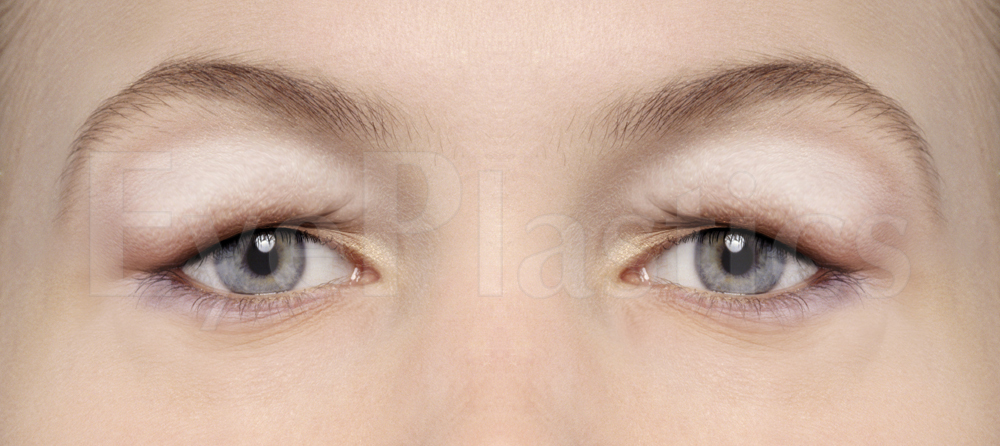
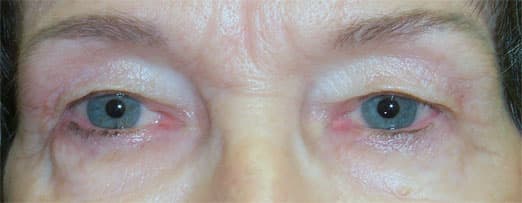
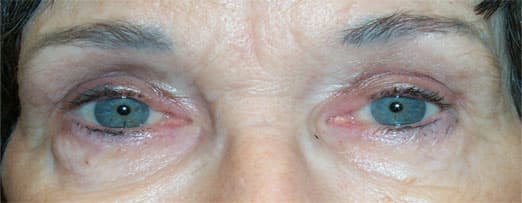
Upper eyelid blepharoplasty removes the strip of excess skin that accumulates over the lid crease with age. When this skin overhangs the lashes and obstructs the superior visual field, the procedure becomes functional and may be covered by insurance — documented with visual field testing and photography. Incisions are placed within the natural eyelid crease and heal to a nearly invisible line.
Procedure at a Glance
- Removes excess skin and, when present, herniated pre-aponeurotic fat
- Incision hidden in the lid crease; sutures removed at 7 days
- Can be combined with brow elevation or ptosis repair
- Typically 30–60 minutes per side; outpatient under local anesthesia
Blepharoplasty — Pre/Post Comparison
Slide the control to compare pre-operative and post-operative appearance.
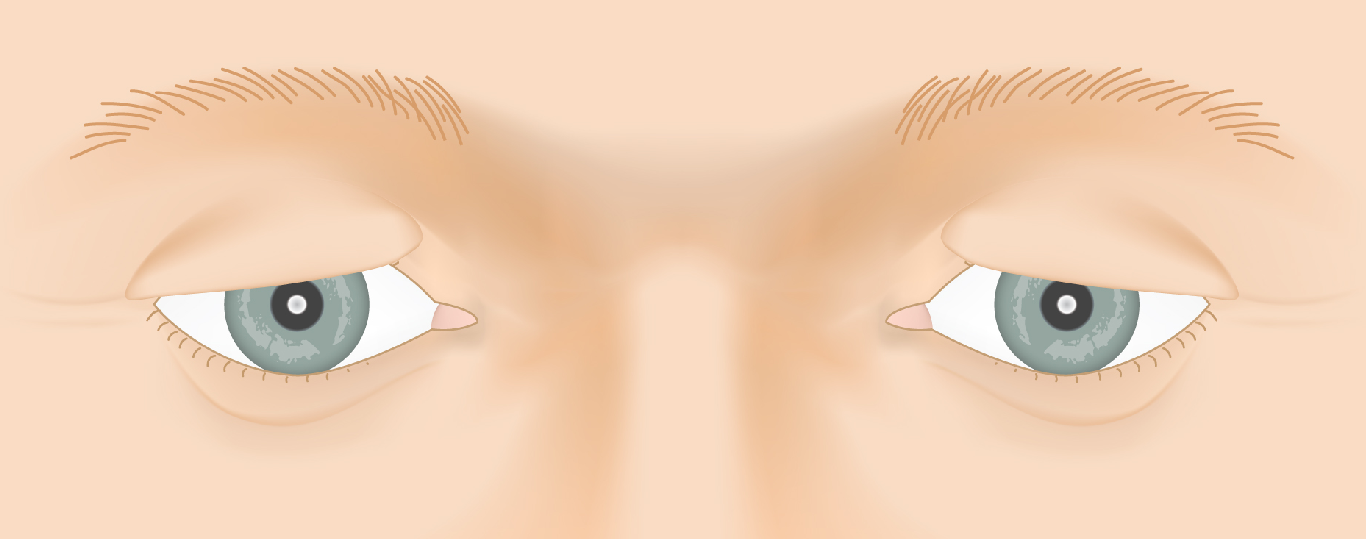
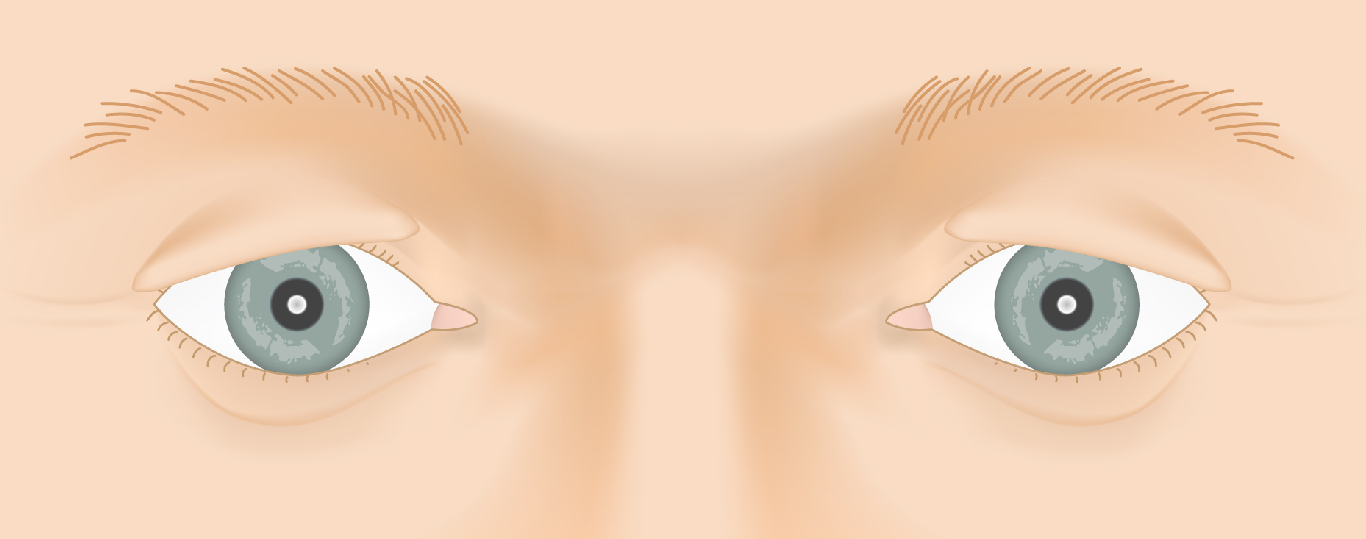
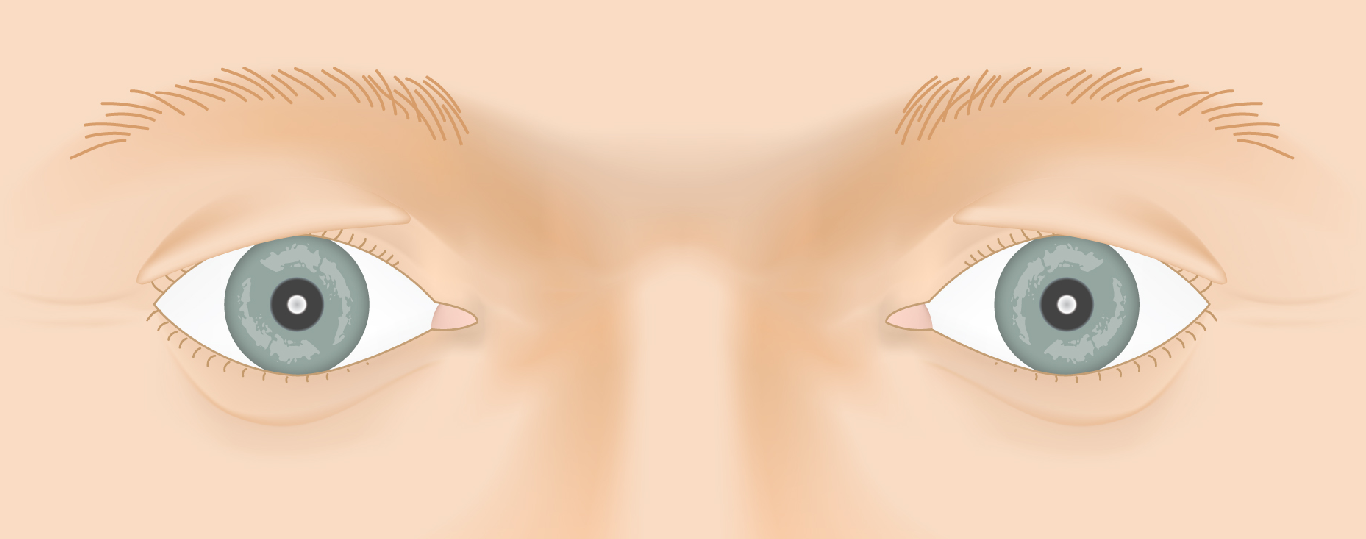
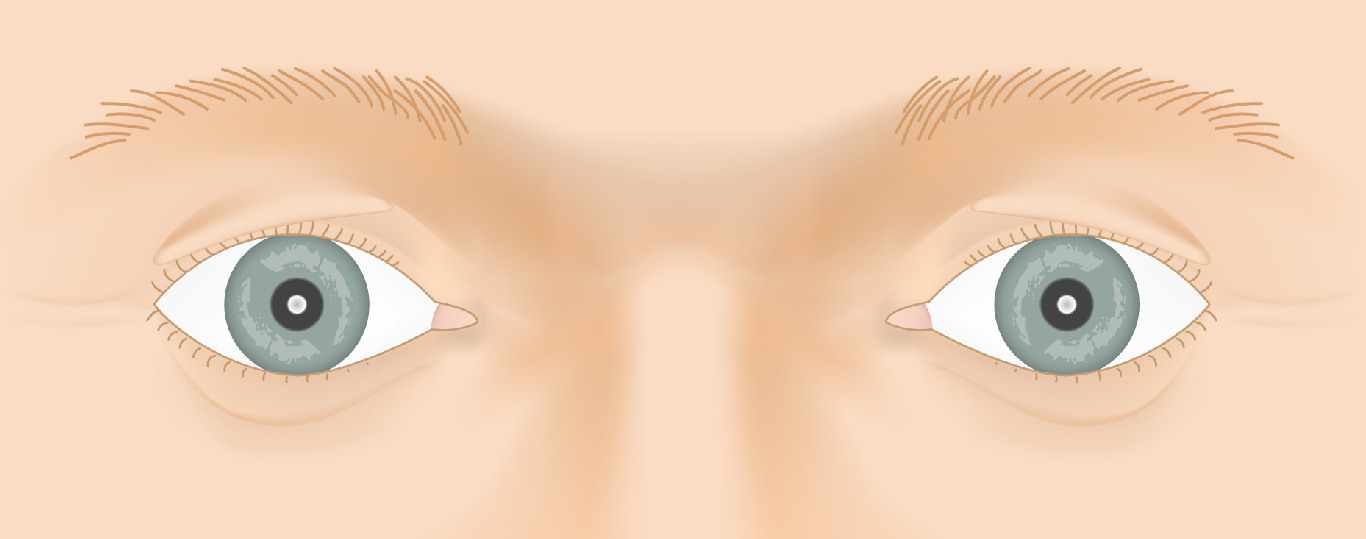
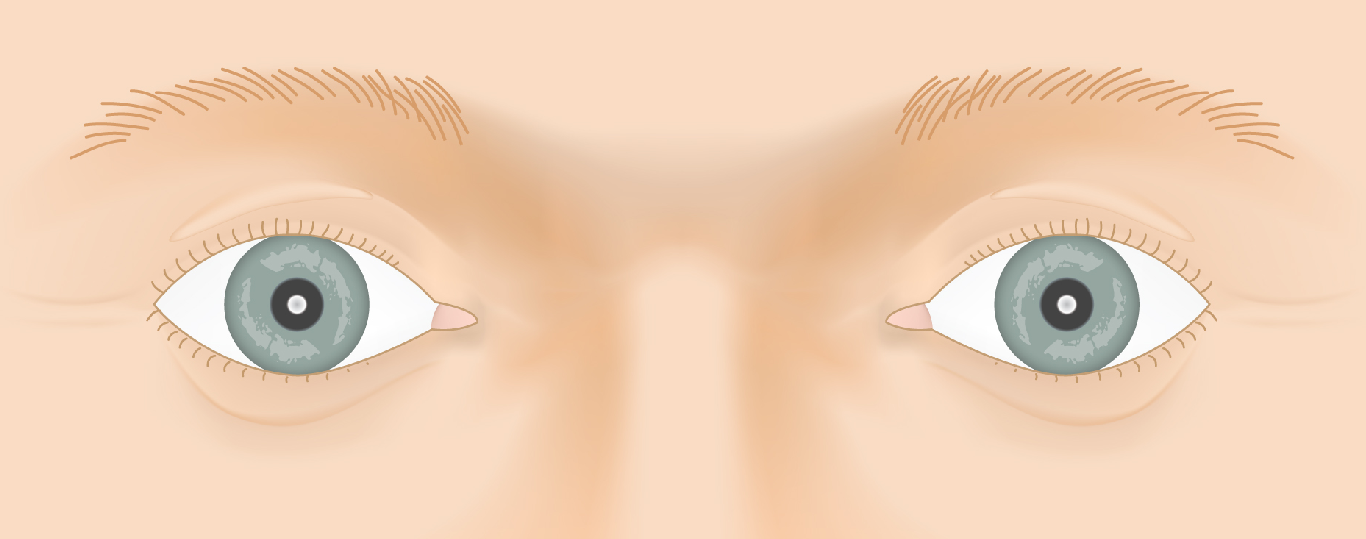
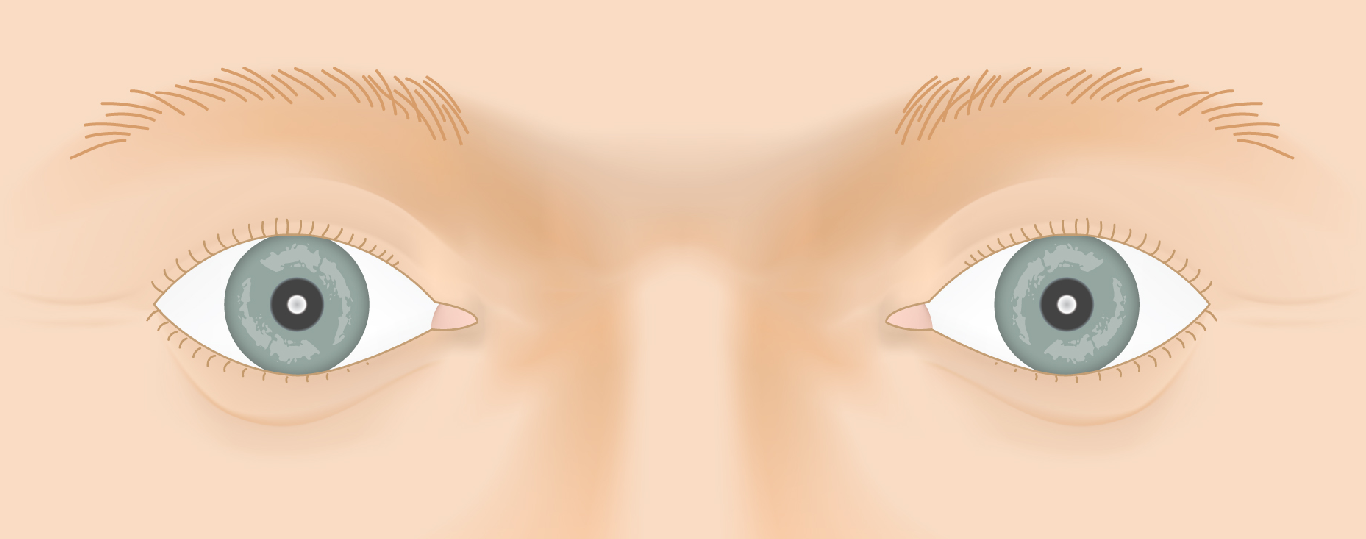
Drag the slider to compare
Upper Blepharoplasty Before & After
1 / 5Drag the divider left or right to compare. Select a case in the strip below.
Lower Eyelid Blepharoplasty
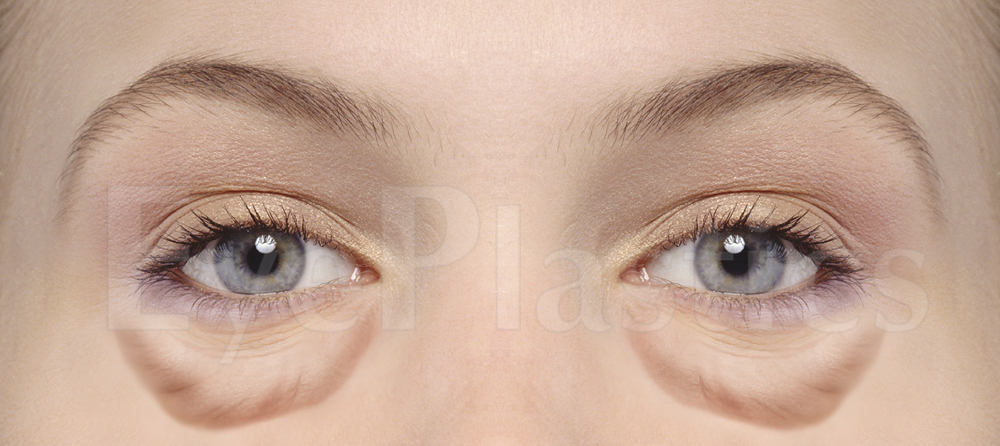
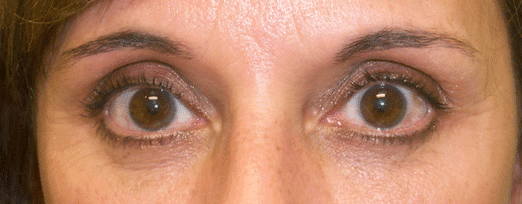
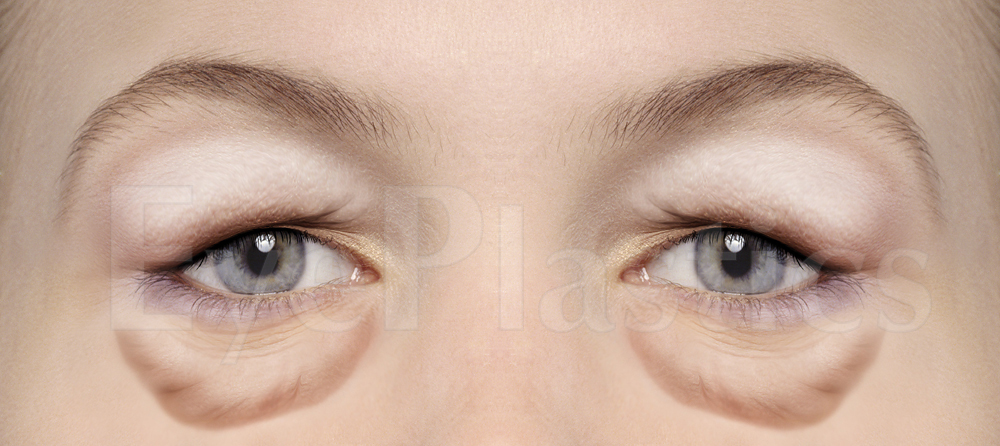
Lower eyelid blepharoplasty is performed almost exclusively for cosmetic reasons — to reduce herniated fat bags and lower lid skin wrinkling. Two approaches are used depending on anatomy:
- Transconjunctival (internal): Incision through the inner conjunctival surface; no external scar. Preferred when skin excess is minimal and fat removal or repositioning is the primary goal.
- Transcutaneous (external): Incision just below the lash line allows concurrent skin removal. Requires precise tension-free closure to avoid ectropion (lid turning outward).
Fat repositioning — moving orbital fat over the orbital rim rather than simply removing it — fills the tear-trough hollow and produces a more natural result than pure excision.
Lower blepharoplasty can be combined with fat repositioning to restore volume and address tear-trough deformity — see Fat Transfer & Repositioning for details.
Lower Blepharoplasty Before & After
1 / 6Drag the divider left or right to compare. Select a case in the strip below.
Four-Lid Blepharoplasty
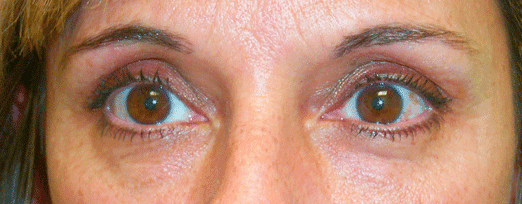
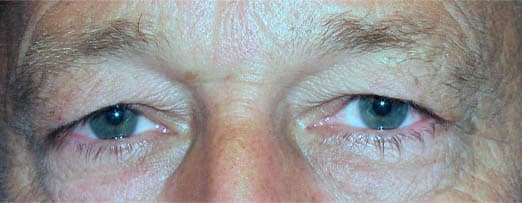
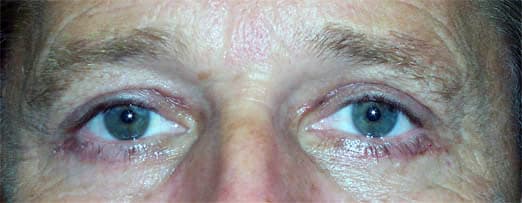
When both upper and lower eyelids require surgery, all four lids are treated in a single session. Combined upper and lower blepharoplasty provides the most complete periorbital rejuvenation and is appropriate when both skin excess and lower lid fat herniation are significant.
Upper & Lower Blepharoplasty Before & After
1 / 5Drag the divider left or right to compare. Select a case in the strip below.
Surgery Description
Blepharoplasty Surgery — Interactive Animation
Explore eyelid anatomy and the surgical steps for upper and lower blepharoplasty using the menu on the left.
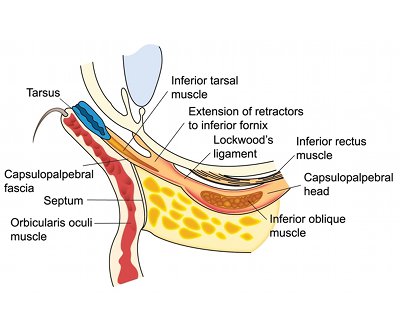
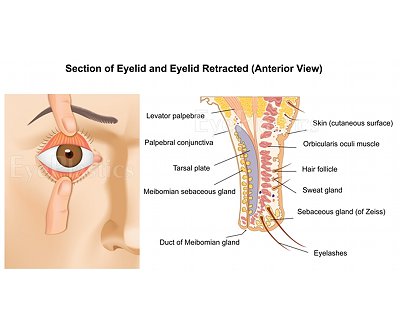
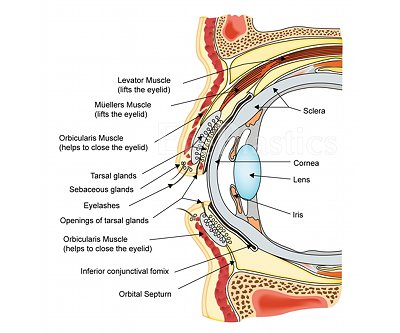
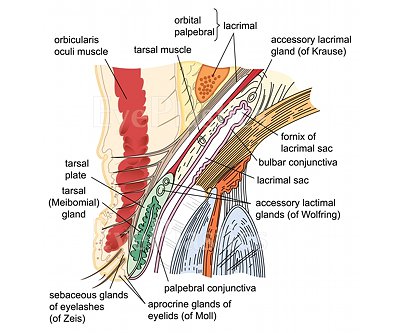
Blepharoplasty is performed through external incisions placed along the natural skin lines of the eyelids — the crease of the upper lid, or below the lashes of the lower lid — or through the inner conjunctival surface (transconjunctival blepharoplasty). The surgeon removes excess skin, trims or repositions fat, and tightens supporting structures before closing incisions with fine sutures.
The operation typically takes one to three hours depending on the number of lids treated and the techniques used. After surgery, swelling and bruising are expected for 7–14 days; the final result is typically stable by 3 months.
Stepwise Surgical Description
- Marking: Incision sites are marked before surgery with the patient seated upright. Meticulous marking dictates the outcome.
- Anesthesia: Local anesthesia is injected for each eyelid; IV sedation is added for comfort.
- Incision: Upper lid incisions follow the eyelid crease. Lower lid incisions are placed just below the lash line or through the conjunctiva.
- Skin and fat excision: Excess skin is excised; the orbital septum is opened to access fat compartments. Fat is removed or repositioned as needed.
- Hemostasis: Careful hemostasis is essential — the orbicularis oculi is highly vascular and retrobulbar bleeding can threaten vision.
- Closure: Incisions are closed with interrupted fine sutures, removed at 7–8 days.
Recovery
- Discoloration, bruising, and swelling for up to 7–14 days
- Ice packs, head elevation, and restricted activity for the first week
- Lubricating eye drops as prescribed
- Final result stable at 3 months; effects typically last 5–10 years
Below is a surgical video demonstrating an actual upper eyelid blepharoplasty
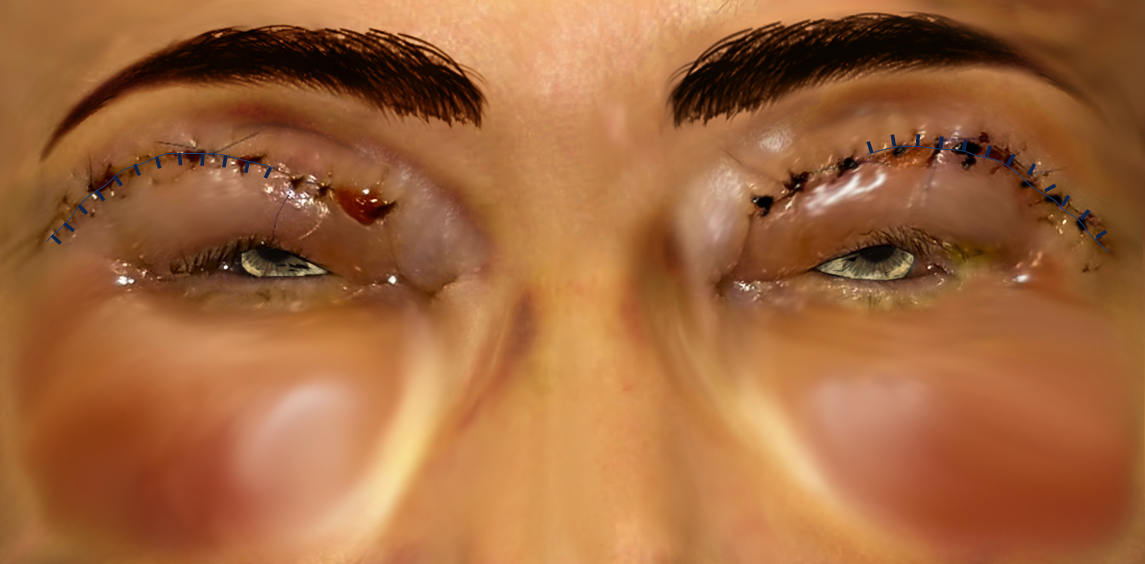
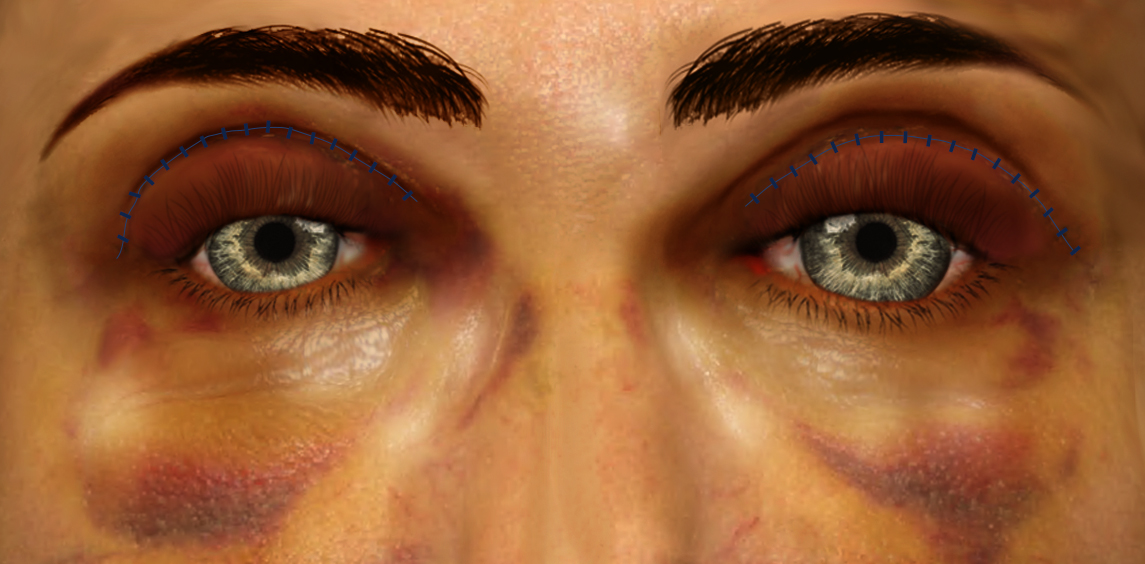
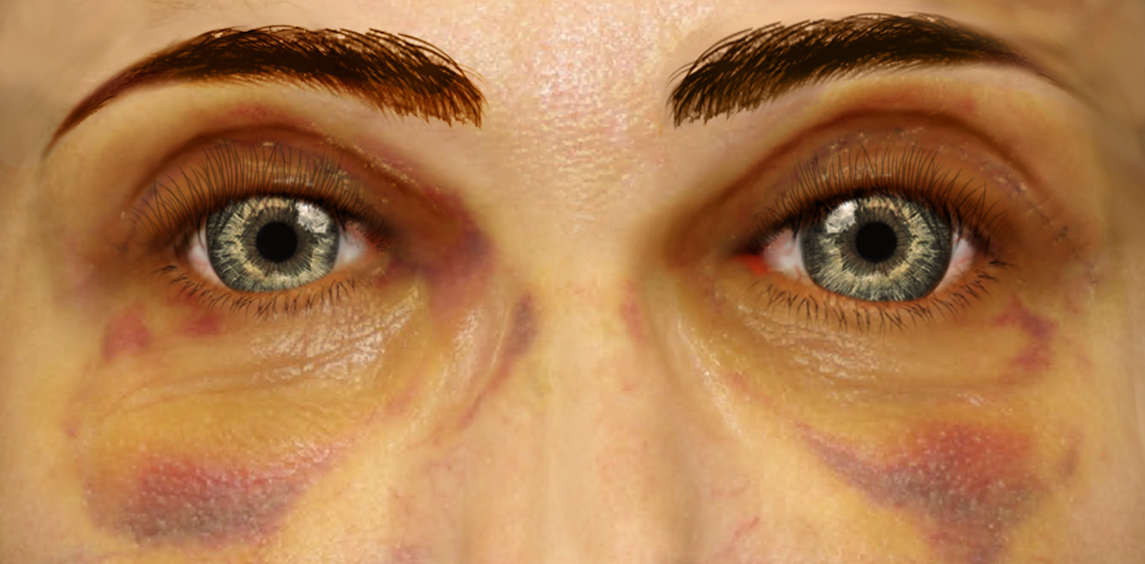
Recovery Timeline
Swelling and bruising peak at 48 hours and resolve substantially over 1–3 weeks. The progression below shows a typical upper blepharoplasty recovery.
Patients of Asian heritage may benefit from a specialized technique — see Asian Blepharoplasty for details on double-eyelid surgery and pretarsal crease creation.
Potential Risks
Blepharoplasty is a well-tolerated outpatient procedure, but like all surgery it carries risks. Your oculoplastic surgeon reviews all risks with you before surgery.
Most Common
- Bruising and swelling — expected for 1–2 weeks; managed with ice, head elevation, and limited activity.
- Dry eyes / incomplete closure (lagophthalmos) — temporary in most patients; lubricating drops are prescribed. Patients with pre-existing dry eye are counseled before surgery.
- Lid position asymmetry — minor asymmetry is possible; significant overcorrection (ectropion, lid retraction) is rare and typically correctable.
- Ptosis — drooping of the upper lid due to levator swelling is common early; if due to levator injury it requires prompt repair.
Most Serious (rare)
- Retrobulbar hemorrhage — bleeding behind the eye can cause vision loss. Occurs in fewer than 1 in 2,000 cases. Signs are a firm, proptotic eye and vision change; requires immediate decompression.
- Corneal injury — from dryness, incomplete closure, or inadvertent contact; prevented with careful technique and postoperative lubrication.
A full list of risks and what to watch for is provided at your consultation and included in your pre-operative packet.
Frequently Asked Questions
- What is blepharoplasty?
- Blepharoplasty is a surgical procedure to remove excess skin, muscle, and fat from the upper or lower eyelids. It treats both cosmetic concerns (hooded or puffy lids) and functional problems (drooping skin that obstructs the visual field).
- Who should perform blepharoplasty?
- Blepharoplasty is most safely performed by an oculoplastic surgeon — a physician with dual training in ophthalmology and plastic surgery of the eye and orbit. Oculoplastic surgeons who are ASOPRS fellowship-trained have the deepest expertise in eyelid anatomy and function.
- Is blepharoplasty covered by insurance?
- Upper eyelid blepharoplasty may be covered by insurance when it is functionally indicated — meaning the drooping skin is obstructing the superior visual field, as documented by a visual field test. Purely cosmetic lower eyelid surgery is typically not covered.
- What is the recovery time after blepharoplasty?
- Most patients are presentable in public within 10–14 days. Bruising and swelling typically peak at 48–72 hours and resolve significantly within 2 weeks. Final results, including subtle scar maturation, develop over 3–6 months.
- What is the difference between upper and lower blepharoplasty?
- Upper blepharoplasty removes excess skin (and sometimes fat) from the upper eyelid to correct hooding or drooping. Lower blepharoplasty addresses under-eye bags caused by fat prolapse, with or without skin removal. They address different anatomical compartments and are sometimes performed together (four-lid blepharoplasty).
- What should I expect during my blepharoplasty consultation?
- During your consultation, your surgeon will evaluate your eyelids, discuss your aesthetic goals, and determine whether you're a good candidate for surgery. They will review your medical history, current medications, and any previous eye conditions to ensure your safety. Your surgeon will also explain the surgical approach, show you before-and-after photos, and answer any questions about realistic outcomes. This is an important time to communicate your concerns and establish clear expectations for your results.
- What are the potential risks and complications of blepharoplasty?
- While blepharoplasty is generally safe, potential complications include temporary swelling and bruising, dry eyes, and minor asymmetry between eyelids. Rare but serious complications may include infection, excessive bleeding, or changes in eyelid position. Choosing a fellowship-trained oculoplastic surgeon significantly reduces these risks, as they have specialized training in eyelid anatomy and reconstruction. Most patients experience minimal complications when they follow post-operative care instructions carefully.
Find a Specialist
Connect with a board-certified oculoplastic surgeon who specializes in blepharoplasty.
Search the Directory →