
Botulinum Toxin
Botulinum toxin neuromodulators (Botox, Dysport, Xeomin, Jeuveau, Daxxify) for cosmetic treatment of dynamic wrinkles and therapeutic treatment of blepharospasm and hemifacial spasm.
Botulinum Toxin — Neuromodulators
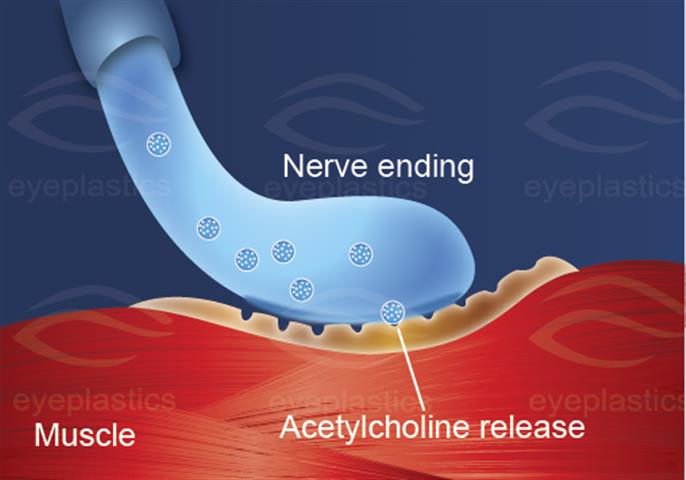
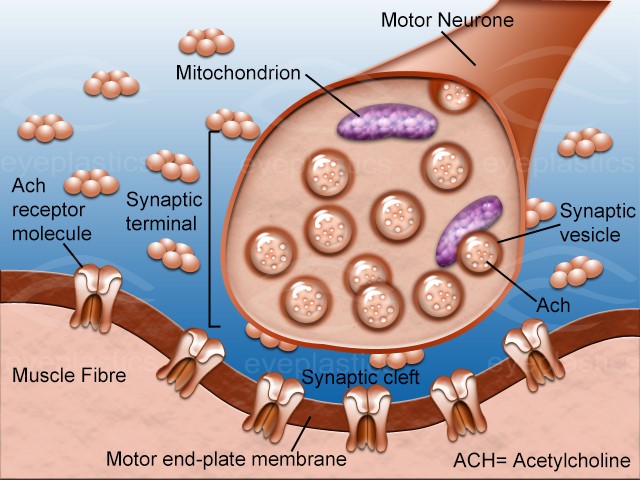
Botulinum toxin type A reversibly blocks acetylcholine release at the neuromuscular junction, producing temporary, controlled weakening of injected muscles. In cosmetic practice, this smooths dynamic wrinkles — lines created by repetitive facial muscle contraction. In therapeutic use, it provides lasting relief from involuntary muscle spasms. Oculoplastic surgeons are uniquely qualified to administer periorbital injections given their deep anatomical expertise in the eyelid, orbit, and surrounding facial musculature.
Botulinum toxin is also the first-line treatment for Blepharospasm and hemifacial spasm. For volume restoration with injectable fillers, see Dermal Fillers. For surgical rejuvenation, see Blepharoplasty and Brow Lift.
How Botulinum Toxin Works
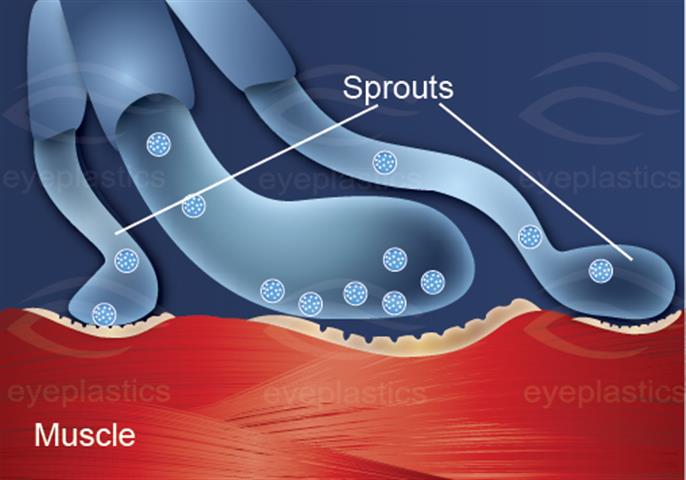
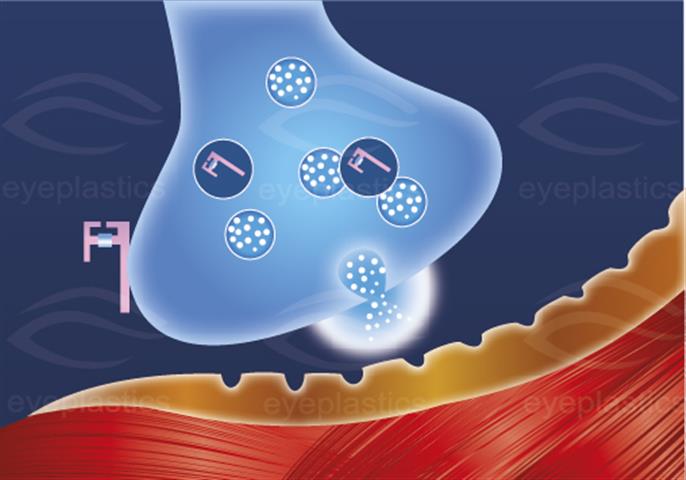
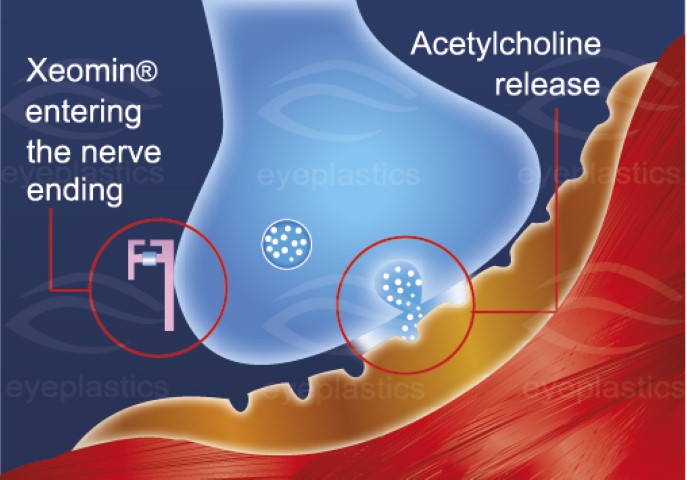
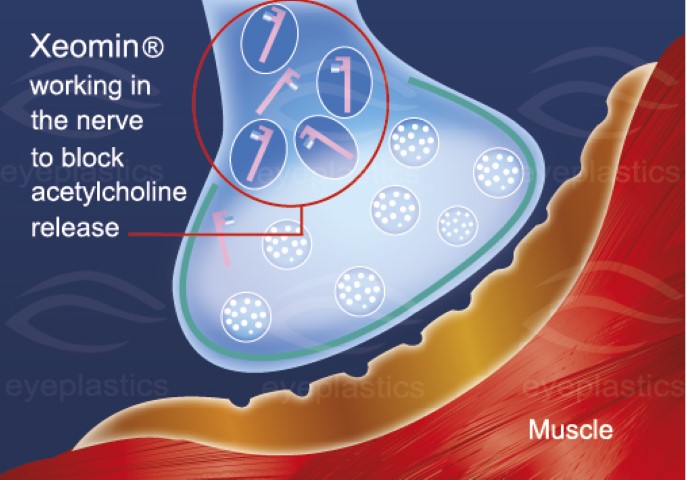
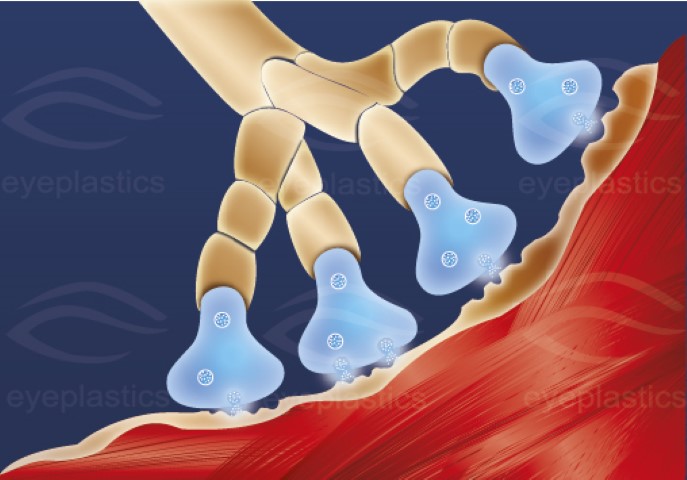
Botulinum toxin blocks acetylcholine release at the neuromuscular junction by cleaving SNARE proteins inside the nerve terminal — proteins essential for vesicle fusion. Without fusion, acetylcholine cannot be released and the muscle cannot contract. Effects are temporary because nerve terminals eventually sprout new axon branches that bypass the blocked junction, which is why results last 3–6 months rather than permanently.
Mechanism of Action — Illustrated
Muscle Anatomy & Product Differences
Product Comparison — All FDA-Approved Botulinum Toxins
Six botulinum toxin type A products are currently FDA-approved in the United States. While all share the same mechanism, they differ in formulation, unit potency, onset, duration, and specific indications. These products are not interchangeable on a unit-for-unit basis — dosing must account for the conversion factor for each product.
Units are not interchangeable. Dysport units and Daxxify units are not equivalent to Botox/Xeomin/Jeuveau/Letybo units. Physicians convert doses based on the specific product used. Do not compare doses between different products without knowing the conversion factor.
Cosmetic Treatment Areas
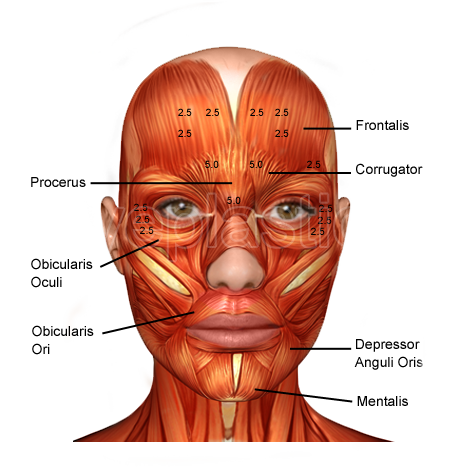
Glabellar Complex (“11 Lines”)
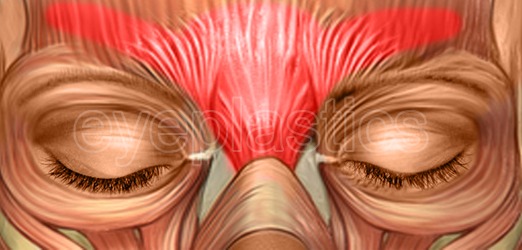
The corrugator supercilii and procerus muscles between the brows create vertical glabellar furrows — the “11 lines” — that impart an appearance of anger or worry. This is the most common treatment area and was the first FDA-approved cosmetic indication for all products. Typical dose: 20–25 units Botox-equivalent. Reduces frowning lines and softens the glabellar area. All six FDA-approved products have at least a glabellar line indication.
Forehead Lines
The frontalis muscle creates horizontal forehead creases. Treatment requires careful dose titration — weakening the frontalis too aggressively causes brow ptosis (lowered brows), particularly in patients who habitually elevate their brows to compensate for heavy upper lids or brow ptosis. Typical dose: 10–20 units Botox-equivalent across 4–6 injection points. Brow position must be assessed before treating the forehead. Dysport may spread more than desired in this area; precise injectors may prefer Botox or Xeomin.
Crow’s Feet (Lateral Canthal Lines)
The lateral orbicularis oculi creates fan-shaped creases at the outer corners of the eyes with smiling. Small doses (6–12 units Botox-equivalent per side) injected 1 cm lateral to the orbital rim reduce these lines while preserving natural animation. Over-treatment produces a flattened, unnatural appearance. Botox Cosmetic has explicit FDA approval for lateral canthal lines.
Brow Lifting
A non-surgical brow lift is achieved by injecting small doses into the lateral orbicularis oculi just below the lateral brow tail. This relaxes the brow depressor effect of the orbicularis, allowing the frontalis to elevate the lateral brow by 1–3 mm — a subtle but effective improvement in brow arch. Best combined with conservative forehead treatment.
Bunny Lines
Diagonal creases across the nasal bridge from the nasalis muscle. Treated with 4–6 units at the nasal bridge. Commonly appear as a compensatory contraction after glabellar treatment and can be addressed at the same visit.
Lower Face & Neck
Small doses to the lip lines (orbicularis oris), chin (mentalis dimpling), and neck (platysmal bands) extend perioral and lower face rejuvenation. These areas require precise technique — functional compromise of lip movement or chewing is possible with incorrect placement. The lower face is not an area for beginners.
Choosing a Product — Clinical Guidance
For the Periorbital Area
Botox or Xeomin are generally preferred — their more localized diffusion profile reduces the risk of spread into the levator muscle (causing ptosis) compared to Dysport. Precision matters most around the eyes.
For Longer Duration
Daxxify is the only product with a clinical trial-proven 6-month duration. Ideal for patients who want less frequent visits or those with blepharospasm who find quarterly injections burdensome.
For Large Surface Areas
Dysport’s wider diffusion makes it efficient for the forehead and broad platysmal bands, where even spread is desirable. Its faster onset (2–3 days vs. 3–5) can also be convenient for patients with tight timelines.
For Patients with Antibody Concerns
Xeomin’s “naked toxin” formulation (no accessory proteins) may be preferred for high-dose therapeutic use or patients with a history of secondary non-response — where antibodies to complexing proteins may be contributing.
Treatment Details
- In-clinic procedure — no anesthesia required; topical ice or numbing cream optional
- Fine needle (30–32G); multiple small injections at anatomically precise points
- Onset: 2–5 days depending on product; peak effect: 7–14 days
- Duration: 3–4 months for most products; up to 6 months with Daxxify
- Maintenance: Retreatment every 3–6 months to sustain results
- Touch-up: A 2-week follow-up allows refinement of asymmetry or undertreated areas
- Reconstitution: Toxin is lyophilized (freeze-dried) and reconstituted with sterile saline before use; concentration varies by practice. Xeomin is room-temperature stable before reconstitution.
Side Effects & Risks
- Bruising — common; resolves in 5–10 days. Avoiding blood thinners 1 week prior reduces risk.
- Eyelid ptosis — the most clinically significant complication; from toxin diffusion into the levator palpebrae superioris. Most common with glabellar injections placed too close to or below the orbital rim. Produces a drooped upper eyelid. Treated with apraclonidine 0.5% drops (alpha-adrenergic agonist stimulating Müller’s muscle), which provides 1–2 mm elevation. Resolves completely as the toxin effect wears off (6–12 weeks). Risk is lowest with products with limited diffusion (Botox, Xeomin).
- Brow ptosis — from excess frontalis weakening; heavy brows drop further. Prevented by conservative dosing and sparing the inferior-central frontalis.
- Asymmetry — muscle strength varies between sides; may require touch-up injection at the 2-week visit.
- Headache — transient; occasionally reported following first treatments, resolves within 24–48 hours.
- Secondary non-response — reduced efficacy with long-term use due to neutralizing antibody formation. More common with frequent high-dose injections. Mitigated by maximizing injection intervals and minimizing dose. Switching products or using Xeomin (no complexing proteins) may help.
- Dysphagia (neck/cervical injections) — relevant for blepharospasm patients receiving high-dose injections; transient swallowing difficulty is the most common serious adverse effect at high therapeutic doses.
Therapeutic Uses
Beyond cosmetic applications, oculoplastic surgeons use botulinum toxin therapeutically for:
- Essential blepharospasm — injections into the orbicularis oculi provide 10–16 weeks of relief from involuntary eyelid closure. Botox, Xeomin, and Daxxify all have FDA approval for blepharospasm. See the Blepharospasm page for full details.
- Hemifacial spasm — unilateral facial muscle spasms from facial nerve compression; treated with injections targeting the affected orbicularis, zygomaticus, and frontalis on the involved side
- Hyperhidrosis — excessive sweating of the palms, axillae, forehead, or scalp; injections reduce sweating by blocking sudomotor nerve terminals
- Migraine prevention — 31-point injection protocol for chronic migraine (typically administered by neurology); Botox is the only FDA-approved toxin for this indication
- Cervical dystonia — abnormal neck posturing from involuntary sternocleidomastoid and trapezius contraction; Botox, Dysport, Xeomin, and Daxxify are FDA approved
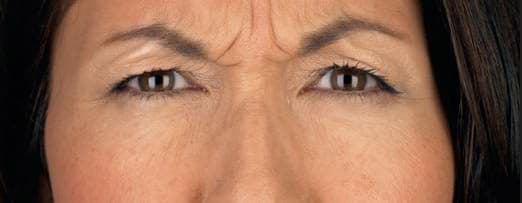
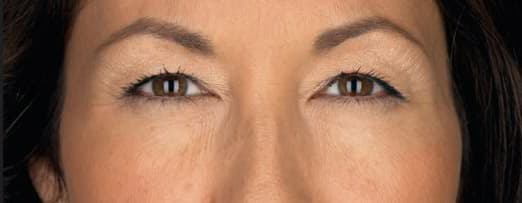
Botulinum Toxin Before & After
1 / 5Drag the divider left or right to compare. Select a case in the strip below.
Frequently Asked Questions
- What is the difference between Botox, Dysport, Xeomin, and Daxxify?
- All are botulinum toxin type A products that temporarily relax muscles by blocking acetylcholine release. Botox (onabotulinumtoxinA) and Dysport (abobotulinumtoxinA) have albumin as a carrier protein; Xeomin (incobotulinumtoxinA) does not (making it the 'naked' toxin, potentially reducing antibody formation). Daxxify (daxibotulinumtoxinA-lanm) uses a novel peptide stabilizer and has a longer duration (up to 6 months). Units are not interchangeable between products.
- How long does botulinum toxin last?
- Most botulinum toxin products last 3–4 months for cosmetic wrinkle treatment. Daxxify may last up to 6 months. Therapeutic uses (blepharospasm, hemifacial spasm) may have shorter duration due to higher metabolic activity in the treatment area.
- Can botulinum toxin lift the brow?
- Yes — strategic injection of botulinum toxin into the depressor muscles of the brow (orbicularis oculi, corrugator, procerus) can produce a subtle brow lift of 1–2 mm. This 'chemical brow lift' complements upper eyelid blepharoplasty and is often performed in combination with it.
- What should I expect during a botulinum toxin consultation?
- During your consultation, your oculoplastic surgeon will evaluate your facial anatomy, discuss your cosmetic goals, and assess which areas would benefit most from treatment. They will review the different botulinum toxin products available, explain the expected results, and address any concerns about side effects or contraindications. This is an excellent time to ask questions and ensure you have realistic expectations about the outcome.
- What are the common side effects and risks of botulinum toxin?
- Most side effects are mild and temporary, including bruising, swelling, or redness at injection sites that typically resolve within a few days. Rare but more serious complications can include asymmetrical results, drooping of the eyelid or eyebrow, or difficulty with facial expressions if too much product is used. Choosing an experienced oculoplastic surgeon who understands facial anatomy significantly reduces the risk of adverse outcomes.
- Am I a good candidate for botulinum toxin treatment?
- Good candidates are generally adults with dynamic wrinkles caused by repetitive facial movements, particularly on the forehead, between the brows, and around the eyes. Those with certain neuromuscular disorders, pregnancy, breastfeeding, or allergies to any ingredients in the product may not be suitable candidates. Your oculoplastic surgeon can determine your candidacy and recommend alternative treatments if botulinum toxin is not appropriate for you.
- What should I do after my botulinum toxin treatment?
- You can resume normal activities immediately, though it's recommended to avoid rubbing the treated areas, strenuous exercise, and excessive heat exposure for the first 24 hours to prevent product migration. Results typically begin appearing within 3-7 days and continue to improve over two weeks as the toxin takes full effect. Schedule a follow-up appointment with your surgeon about two weeks after treatment to assess results and make any adjustments if needed.
Find a Specialist
Connect with a board-certified oculoplastic surgeon who specializes in botulinum toxin.
Search the Directory →